Understanding Tooth Discoloration
Teeth discolor through intrinsic and extrinsic mechanisms. Extrinsic staining occurs on the enamel surface from coffee, tea, wine, and tobacco. Intrinsic staining develops within the tooth structure from medications, aging, or enamel damage.
How Whitening Works
Peroxide-based whitening agents penetrate enamel and break down chromogenic stain molecules. The concentration of peroxide directly correlates with whitening effectiveness and potential sensitivity.
Over-the-Counter Options
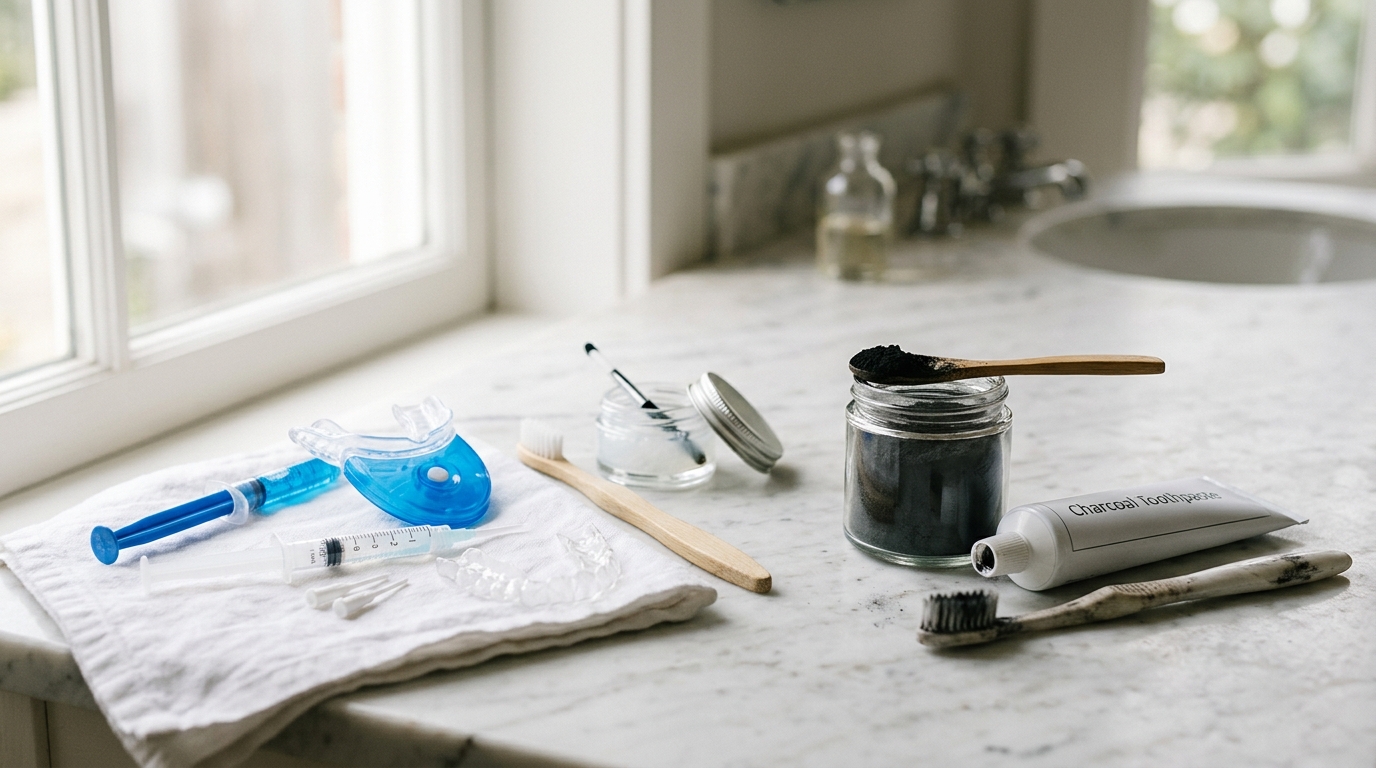
Whitening strips, trays, and toothpastes contain lower peroxide concentrations. Results appear modest and develop slowly over weeks. These options suit maintenance after professional whitening rather than significant whitening.
Most whitening toothpastes contain abrasive particles that mechanically remove surface stains. They don't bleach the tooth structure itself and risk enamel damage with aggressive brushing.
Professional Whitening Advantages
Dentist-supervised whitening uses higher peroxide concentrations in controlled applications. Results dramatically exceed over-the-counter options, whitening teeth 5-8 shades in a single session.
Custom trays fabricated at the dental office hold whitening gel precisely against teeth, maximizing contact while preventing gum irritation. Professional application includes protective barriers for gums and lips.
Managing Sensitivity
Sensitivity during whitening stems from peroxide penetrating exposed dentin. Those with existing sensitivity should inform their dentist before treatment. Desensitizing treatments before and after whitening reduce discomfort.
Avoid acidic foods and beverages immediately after whitening when enamel remains temporarily porous.
Longevity Considerations
Professional results typically last 6-12 months depending on diet and habits. Touch-up treatments maintain brightness without requiring full retreatment. Whitening doesn't affect existing dental work like crowns and fillings.