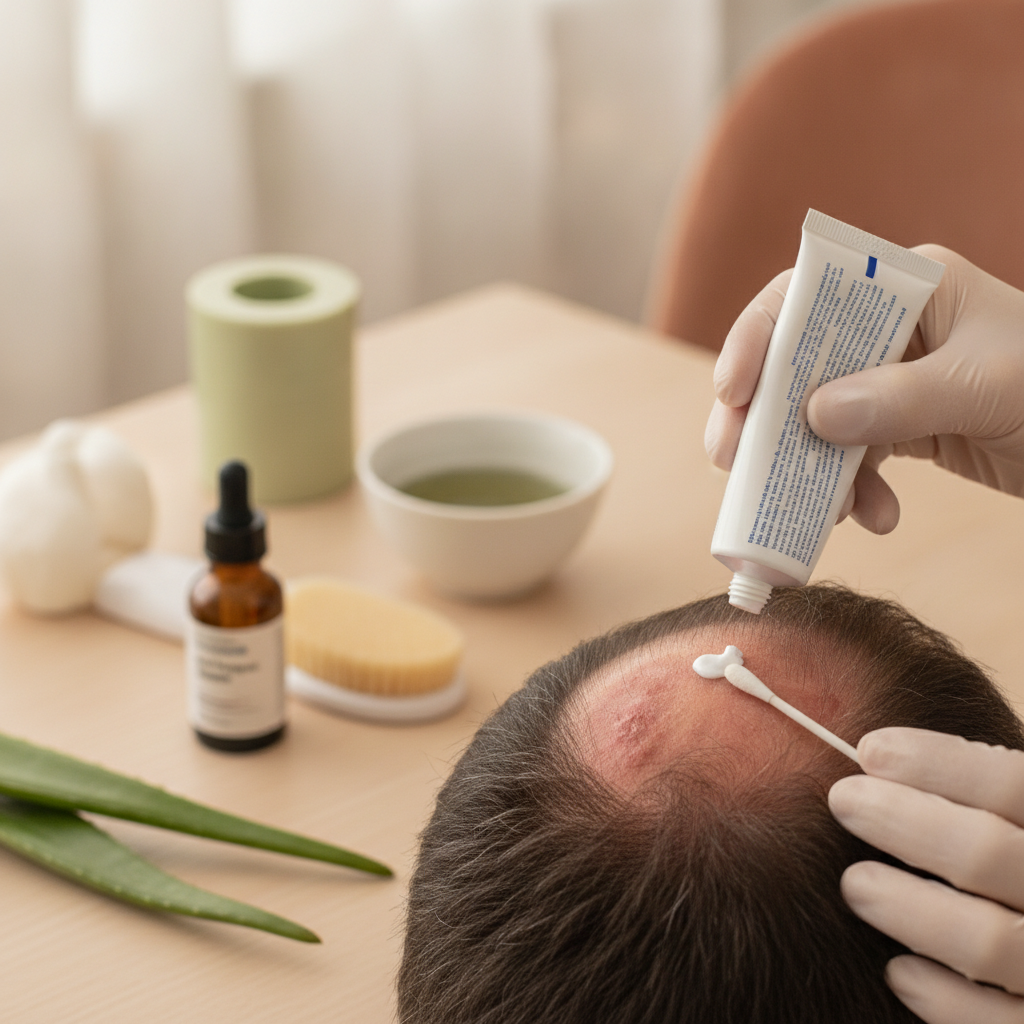
Tinea capitis affects the scalp hair and skin. It is particularly common in children but affects all ages. Multiple fungal species cause this infection.
Presentation
The classic presentation is localized or diffuse hair loss with scaling. The scalp becomes red and inflamed. Hair can be painless pulled from affected areas. Some people develop kerions—boggy, crusted lesions with pustules—from intense inflammation.
Some fungal species appear black-dot tinea—hair breaks off at the surface, leaving black dots. This mimics dandruff but involves hair loss.
Transmission
Direct contact is the primary route. Sharing hairbrushes, combs, hats, or pillows transmits infection. Poor hygiene increases susceptibility, though good hygiene alone doesn't prevent infection after exposure.
Treatment Approach
Topical antifungal treatments alone are insufficient—fungal spores deeply infect hair shafts where topicals don't penetrate well. Oral antifungals are typically necessary.
Griseofulvin has been standard therapy, though terbinafine shows equal or superior efficacy. Treatment duration is typically 4-8 weeks depending on the causative fungus.
Combining oral antifungals with topical shampoos (ketoconazole or selenium sulfide) accelerates improvement and reduces environmental spore shedding.
Contagion Management
During treatment, keep hair covered when possible. Wash hats, bedding, and pillowcases regularly in hot water. Disinfect hairbrushes and combs. Regular treatment with antifungal shampoo reduces spore shedding.
Kerion Management
Inflammatory kerions sometimes require oral corticosteroids temporarily—the inflammation itself impairs immune response to the fungus. Short-term steroid use alongside antifungal therapy improves outcomes.
Prevention
Maintain scalp hygiene. Avoid sharing personal grooming items. Keep hair dry after swimming or sweating. If family members are infected, treat them concurrently if exposure is likely.
Hair Regrowth
Hair regrowth occurs after fungal eradication. Hair that fell out typically regrows within 3-6 months. During this period, hair will be relatively short but growing normally.