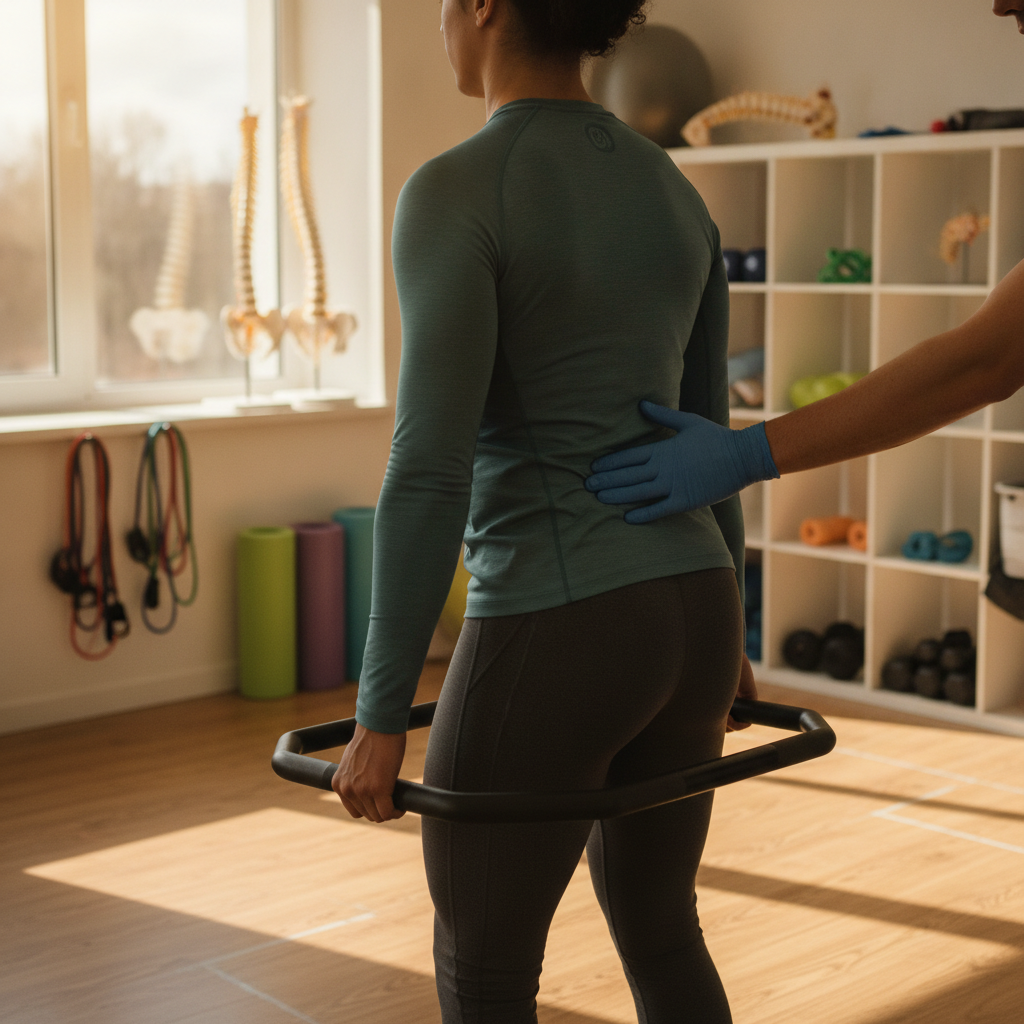
Most back injuries occur during seemingly routine activities: lifting a box, picking up a child, or removing something from a low shelf. Proper technique dramatically reduces injury risk.
The Squat Lift
The squat is safer than bending at the waist. Bend your knees and hips simultaneously while keeping your back straight. Your chest should remain upright. The load stays close to your body, minimizing the force on your spine.
Always test the weight before lifting fully. If something is heavier than expected, ask for assistance rather than straining.
Spinal Position
Maintain a neutral spine throughout the lift—neither flexed forward nor excessively extended backward. Avoid twisting while holding a load. If you need to change direction, move your feet and rotate your whole body rather than rotating your spine.
Load Distribution
Hold heavy objects close to your body. For every inch farther from your spine, the force on your discs increases exponentially. Carry groceries in two bags rather than one to keep loads balanced.
For Regular Lifting
If your job involves frequent lifting, wear a weightlifting belt during heavy lifts. The belt increases intra-abdominal pressure, which stabilizes the spine. It works alongside your muscles rather than replacing them.
Progressive Loading
If you're unaccustomed to physical labor, progress gradually. Your connective tissues require 4-6 weeks to fully adapt to new demands. Gradual progression prevents injury that sudden demands would cause.
Recovery from Lifting Strain
After heavy or unusual lifting, apply ice and monitor for swelling. Gentle movement the next day usually accelerates recovery. Severe pain or progressive symptoms warrant evaluation.